What should I put in a First Aid Kit?
Different types of first aid kits are needed for various situations. For example, a desk job first aid kit would differ from a person working in a high-risk, remote location. However, the minimum content required will be the same. To ensure you have the right kit, you need to refer to the needs assessment.
To ensure you have the correct equipment, HSE suggests that you first complete a needs assessment, which will inform you of your choices. This does not need to be written down; it is to make sure that the equipment you provide will be adequate and appropriate for your environment.
The basics
If you buy a fully stocked kit, it is important to look for the British Standards (BS)8599 or check that it is HSE Compliant. HSE has said that it is not a legal requirement to meet (BS) but your First Aid kit does need to contain what you have identified in your Needs Assessment.
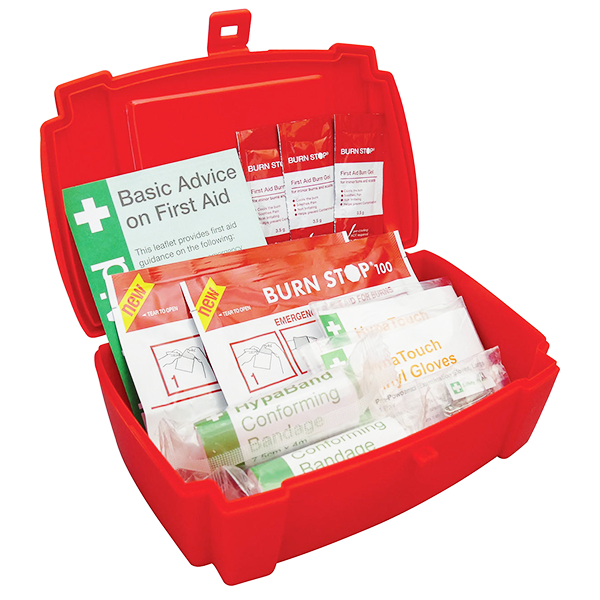
A standard HSE Compliant first aid kit should include:
- A leaflet – full of information with general guidance for first aid.
- Plasters – Sterile, individually wrapped and of assorted sizes for small cuts and grazes.
- Sterile eye pads
- Triangular bandages - Individually wrapped to keep them sterile. Used to support joints, hold dressings in place, and put pressure on wounds.
- Safety pins - British Standard 8599-1 review removed these, but HSE included them on their list)
- Wound dressing - Large and medium size dressing, individually wrapped to keep them sterile and unmedicated. This is to help stop bleeds and help effectively apply pressure on wounds.
- Disposable gloves – These reduce the risk of infection.
Additional to HSE requirements:
- Face shields – These prevent infection when performing CPR
- Scissors – Useful for cutting bandages
- Cleansing and alcohol-free wipes – Use these to clean skin around the wound.
- Adhesive tape - Holds dressing and loose end of a bandage
- Foil blankets – To help retain body heat.
Maintaining the first aid kit
Now you know what to keep inside the first aid kit, it is important to maintain and replace out-of-date equipment. A useful tip to help with this is to set a date to regularly check the equipment and mark it with expiry dates. If it doesn’t have an expiry date on the product, check with the manufacturer how long the product can be kept. Ensure non-sterilised items without an expiry date are still fit for purpose.
Where should I store my first aid kit?
The key thing to remember when storing your first aid kit is it needs to be accessed easily. A personal first aid kit must to be somewhere near for you to use in emergencies. For example, if you have a bag that you regularly carry with you, that would be a good place for the first aid kit to be stored. If you drive a car, you could keep a first aid kit in the vehicle, so you have what you need if an emergency occurs. Having multiple kits is great, you just need to make sure they are in date and useable.
In your workplace, the first aid kit needs to be situated in an obvious, easy to get to setting. It should be clearly labelled and have a white cross on a green background on the container of the kit. All staff need to familiarise themselves with the location of the first aid kit.
Who provides the Kit?
It is a legal requirement for companies to provide a working first aid kit for their employees to access. (Health and Safety (First Aid) Regulations 1981 require employers to provide adequate and appropriate equipment, facilities and personnel to ensure employees receive immediate attention if they are injured or taken ill at work. Including what is required in the first aid box. It is the appointed first Aid lead’s job role to maintain the kit.
Final thoughts
Although first aid kits may vary from situation to situation, the basics required in each kit should always be the same. To ensure efficiency in emergencies, it is important to keep kits in date and useable. Check your kits regularly to make sure all kit is complete and in good condition.
References
HSE - First Aid In Work
HSE - First Aid Legislation
We, JCW Associates (UK) Ltd, are also approved by the First Aid Industry Body (FAIB) to provide First Aid Traninig. Our FAIB Registration number is: 46/21 (873)